Aug
24
to Sep 24
something shared
October 2-3, 2026
7:30pm
Ausland Berlin
Anna Lublina
Gry Tingskog
Sam Hatchwell | Hoyah
Yasmeen Al-Qaisi
An interdisciplinary performance about Jewish-Muslim rhythm with audio description in german language.
An audioflyer in German you find at this link
Tickets at this link. Last minute tickets might be available at the door (cash only).
Shows are Friday 2nd AND Saturday 3rd of October!
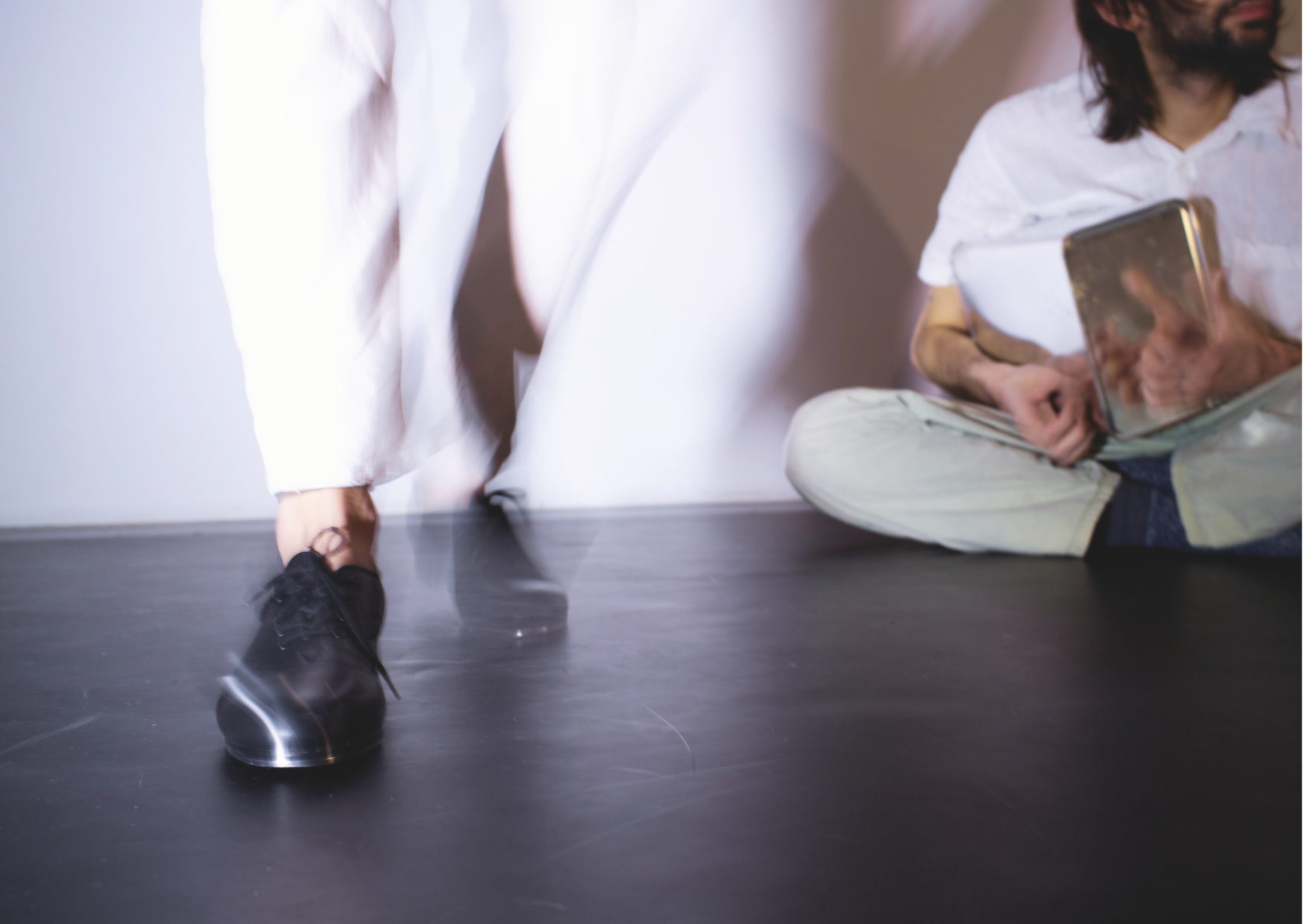
Rhythm travels, Rhythm migrates, Rhythm adapts, Rhythm resists. Rhythm is a vibration that synchronizes your heartbeat to the heartbeat of another. In this performance, Rhythm is the character of Jewish diaspora, reaching back in time to shared Jewish-Muslim worlds: worlds that were not defined by borders, nationalisms, or divisions that emerged with the advent of colonialism. The piece works with tap dance, extended vocal techniques, and live mixing to ask what the political and cultural history of diasporic Jewish rhythm (and its embodiment) can teach us in a time marked by polarization and violence.
Inspired by the work of scholar Ussama Makdisi (who traces the history of the “Jewish” and “Arab” binary invented in recent history) and artist and scholar Ariella Aisha Azoulay (who re-embodies the craft work of her Algerian ancestors to unlearn Zionist imperialism); Yasmeen Al-Qaisi, hoyah, Gry Tingskog and Anna Lublina look at the ancestral Jewish-Muslim rhythms they have become estranged from: Morocco, Bosnia, Uzbekistan, Andalusia, Yemen, Romania, Palestine. In their research, they have traced the path of the rhythms in the archive, seeing how they changed as their worlds encountered colonial, imperial, and national projects like the Soviet Union, Israel, the mandate system. The rhythms have changed (more or less), just like we have changed— increasingly assimilating into the white western colonial world. 5/7 into 4/4, music in the home moved onto the stages of philharmonics. something shared engages with the political history of these rhythms but it also interrogates our initial premise. Is there a pure ancestral rhythm that we have lost? That the world has corrupted? Probably not. Music and rhythm, like food or technology, cannot be contained by ethnic, religious, or national borders. It contaminates, evolves, mixes, assimilates, advances, resists.
The creation of this performance was supported by: Ottilie Roederstein Stipendiem from the Hessian Ministry of Science, Research, Art and Culture; Frankfurt Kulturamt; Kulturamt Gießen; Fonds Darstellende Künste with funds from the Federal Government Commissioner for Culture and the Media. Development supported by the LAB at English Theater Berlin and Ma’r’ayah Fellowship for Jewish and Muslim artists at Kunstlerhaus Bethanien.
Practical Information:
ausland is located at the end of a courtyard in a basement space; please note that the ground in the courtyard is uneven.
If you need help to enter ausland, please contact us through the contact form until 3 days before the event. You find it here: https://www.ausland.berlin/accessibility
Choose the category “Accessibility”.
Or call us until 3 days before the event under this phone number: 0178 8896746
Blind / Partially sighted persons and accompanying persons have free entrance. Assistance dogs are welcome. Please register for audio description 3 days in advance.
You can find more accessibility information about ausland here: https://www.ausland.berlin/accessibility
October 4th, 14:00
F*LAB Festival, Frankfurt Lab
https://frankfurt-lab.de/en/flab-festival/
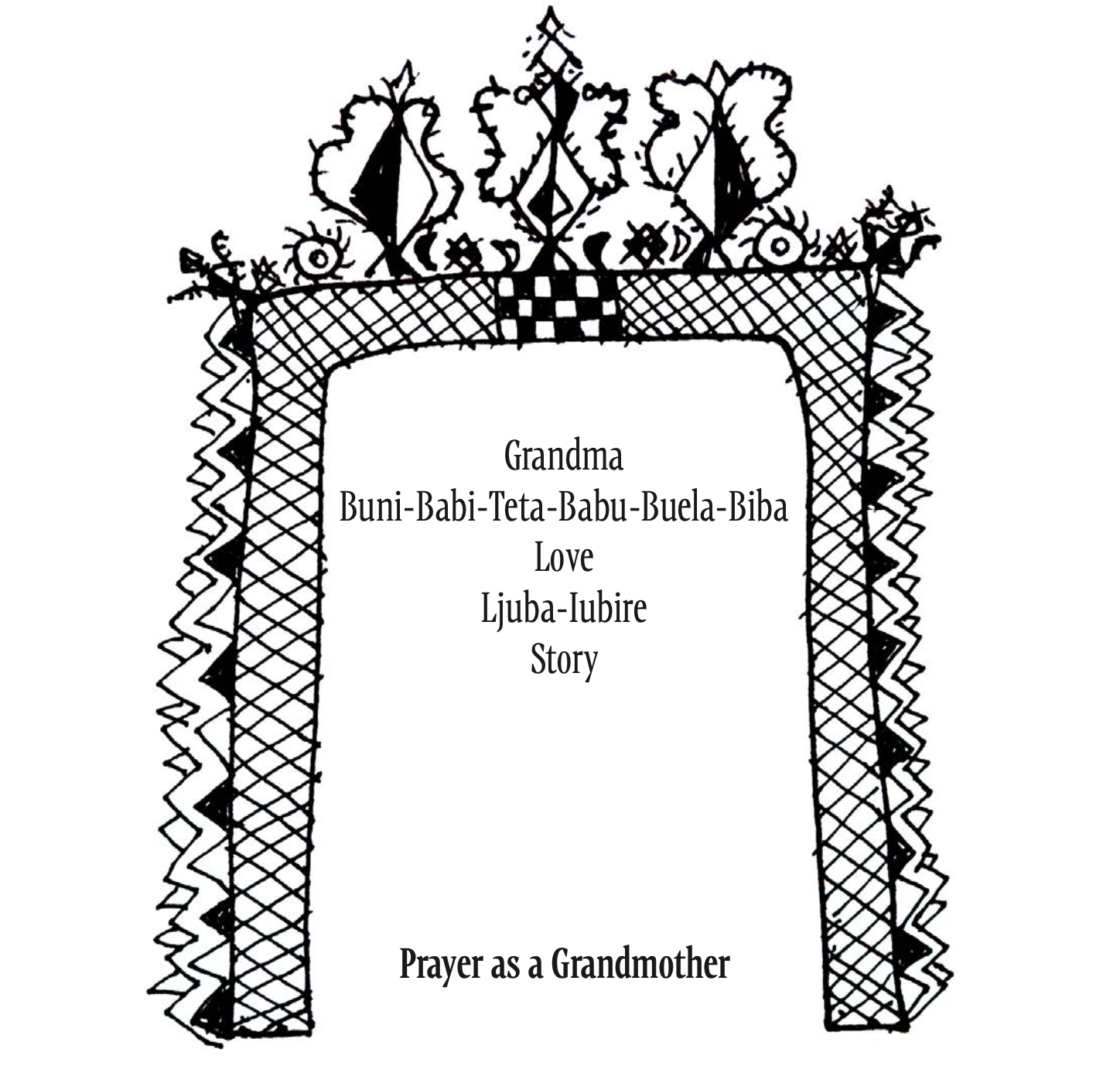
Rhythm is a Grandmother is an interdisciplinary lecture-performance by Yasmeen Al-Qaisi and Anna Lublina. Based on a previous performance the land speaks to me of something shared about the tangled histories (and violent untanglings) of Jewish and Muslim rhythm, the lecture is a poetic response that considers the roles of Lublina and Al-Qaisi in this continuous history. Originally written as an experimental essay, we will perform the text as an interdisciplinary lecture with projected images, live song, tap dance, and garlic-smashing. The dramaturgy of the performance moves between short histories of Muslim-Jewish conviviality among women*, queers, and communists; poems about our grandmothers and the loss of our ancestral histories; rhythmic exposition through tap dance; and a chant for making garlic sauce.
The aim is to feel the holy impurity of our cultures, the ways we bleed into each other throughout history. Music and rhythm, like food or technology, cannot be contained by ethnic, religious, or national borders. It contaminates, evolves, mixes, assimilates, advances, resists. There is both freedom and violence in the inability to be contained. Rhythm is a Grandmother grows and evolves in that ambivalence. As we learn the rhythms of our ancestors (or at least the ones we can find in the archive), we learn about the shared worlds that they have evolved within. We speculate about what is not in the archive, what does not fit into our contemporary narratives about Jewish rhythm or Jewish music particularly from Jewish-Muslim worlds. We see how we, ourselves, change the rhythms, continuing the evolution away from the “original.” We ask them to speak through us. And so we sing about sharing dates and sentimental sediments, we lament, we celebrate, we smash garlic, we talk of forests, we pray. We don’t produce answers but instead a texture of ambivalence in a speculative shared life.
Essay about the work: https://static1.squarespace.com/static/5a86298c4c0dbf57c59df56f/t/697b28e1c586227e70f76031/1769679073411/GRANDMA-1v6_PRINT.pdf
https://www.hellerau.org/programm/residenzprogramm/2026-2027/fragments-of-life-and-art
jointly explore rituals, ceremonies and protest as performative practices and examine traditional cultural forms as a foundation for contemporary spirituality and aesthetics. Their residency project “Veltroyer” is conceived as a performative mourning ritual drawing on traditional Jewish, Iranian and earth-centred practices. It serves to mourn the loss of non-human worlds and to create forms of collective memory and connection.
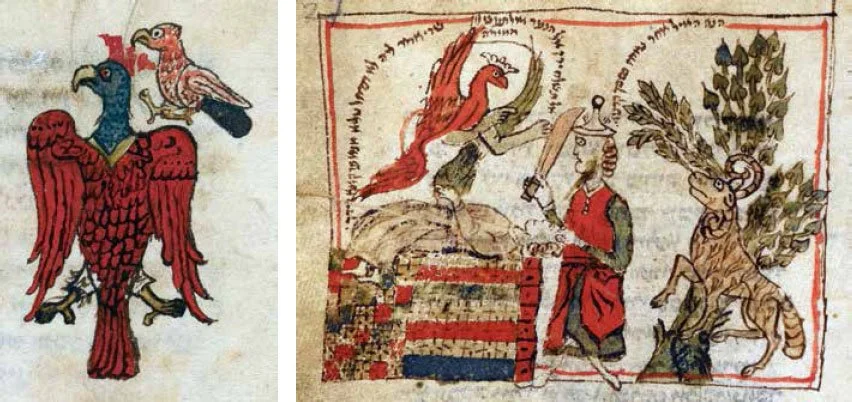
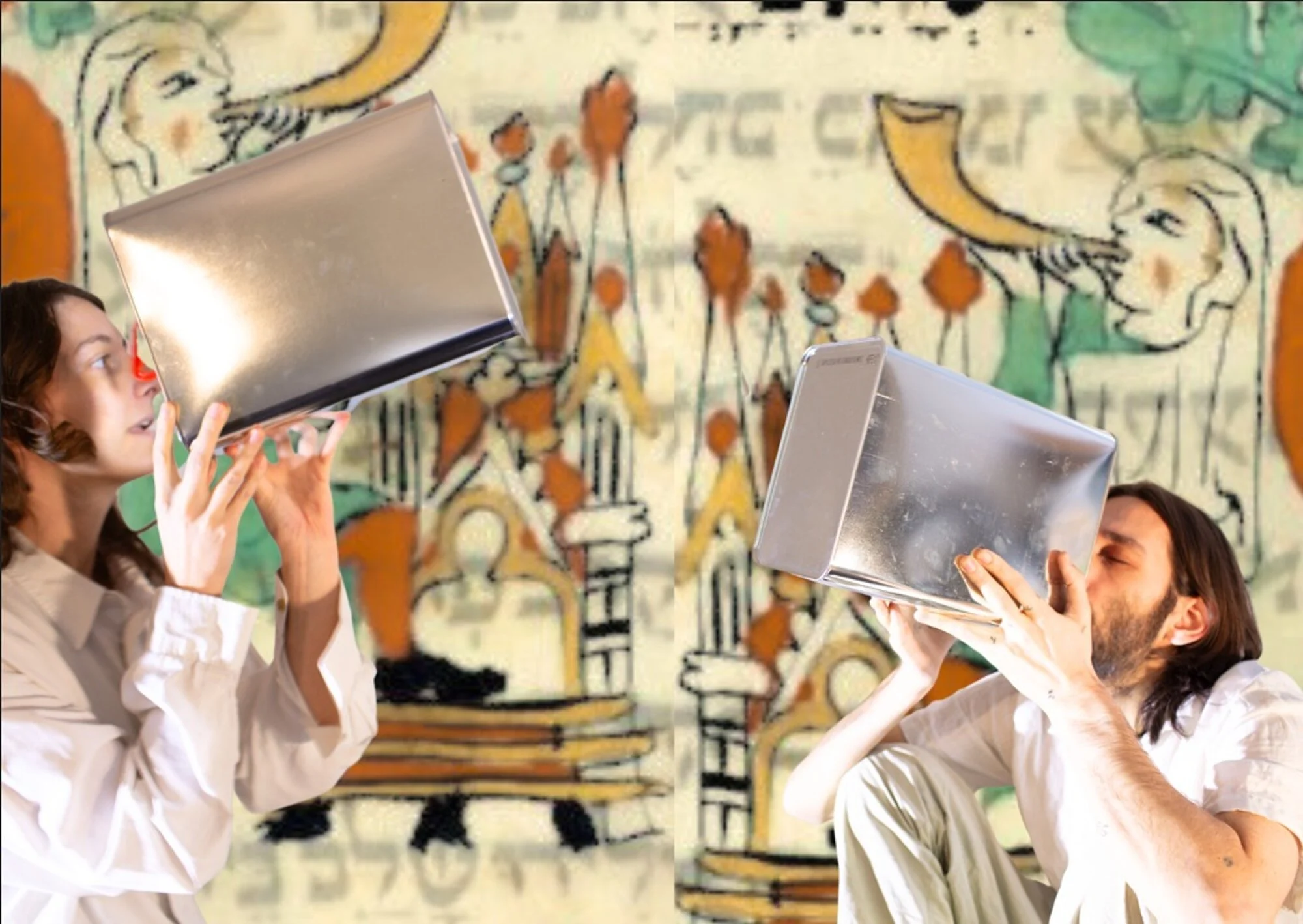
Rhythm travels, migrates, and resists. It is a vibration that can synchronize one’s own heartbeat with that of another. In Anna Lublina’s performance “something shared,” rhythm becomes a symbol of the Jewish diaspora. The project reaches far back into the shared past of Jewish and Muslim worlds—times not yet defined by modern borders, nationalism, or colonial divisions. Based on archival research into shared sound traditions, such as Uzbek Shashmaqam music and Talmudic prayers, a space emerges where history can be physically experienced.
The performance is a special collaboration between artists with diverse diasporic identities, including Jewish and Palestinian perspectives. Together, they experiment with tap dance and extended vocal techniques to find a response to a present often marked by violence and separation. What can the rhythms of the past teach us today? “something shared” invites you to listen and watch as agricultural practices and religious chants give rise to a new, shared language on stage. An evening that prioritizes what unites us over what divides us.
Anna Lublina is known for her interdisciplinary works that weave together music, dance, and history. In “something shared,” she uses tap dance not only as a performance element but as a percussive archive that makes the migratory movements of cultures audible. A profound exploration that shows our roots are often more closely intertwined than we realize.
“something shared” is a co-production as part of the FWT’s Focus on: TIPPING POINTS series.
Sa 23.5.2026 7 pm (with after talk)
FWT: Freies Werkstatt Theater
Su 24.5.2026 6 pm (with touch tour and audio description)
FWT: Freies Werkstatt Theater
Technomancy is a speculative performance ritual evoking and queering technologies for divination – from ancient astrology to artificial intelligence. Technomancy began as a question asking what futures unfold from the computational oracles that interpret our current time. Immersed in darkness, Technomancy is artificial divination for fictive bodies populating synthetic futures.
During their residency at K3, Gry explored fake astrology – the analysis of artificial satellites and their astrological effects in an artificial night – as well as an Oracle Machine – a dance-trained predictive algorithm embodied in Technomancy 's interactive objects.
Choreography, performance, objects: Gry Tingskog
Co-choreography, performance: Lim Mui, Lu Chieregati
Dramaturgy: Anna Lublina
Sounddesign: Sam Hatchwell
26.03.2026
20:30
28.03.2026
18:00
29.03.2026
17:00

Kurzlesungen und Performance
Moderation: Yara Richter
In der dritten Ausgabe von »Solitude im Literaturhaus« geben aktuelle Stipendiat:innen der Akademie Schloss Solitude Einblick in literarische und textbasierte künstlerische Arbeiten. Hiba Ali entwickelt als Digitalkünstler:in anhand von Text und Bild eine Erzählung über eine geheimnisvolle Wunschmaschine, deren Erfüllungen Körper, Gemeinschaft und schließlich die Welt selbst umgestalten und verwandeln. Die Autorin Jeannette Hunziker liest aus dem entstehenden Text »Die Zerriebenen«, in dem vielstimmig über Gemeinschaft und die Rolle der Kunst in unruhigen Zeiten nachgedacht wird. Anna Lublina ist Performancekünstlerin und präsentiert eine Lyrik-Performance, in der sich Sprache im rhythmischen Zerstoßen von Knoblauch durch Wiederholung und Verwandlung entfaltet. Und Maddy Routon ist Autorin und feministische Kulturgeografin. Sie liest Auszüge aus einem Text, der akademische Forschung zu prekären Wohnverhältnissen mit autobiografischem Schreiben verbindet und ein Leben anhand von 24 Wohnorten nachzeichnet. Ein Abend für alle, die Literatur neu erleben wollen – zwischen Sprache, Raum, Bild und Performance.
Eine Kooperation von Literaturhaus Stuttgart und Akademie Schloss Solitude
I am the dramaturg for Gry Tingskog’s Parasight which premieres at Atalante in Gothenburg, Sweden.
December 13-14, 2025
Parasight grows out of a faded faith in the future. If previous generations worked for a better future, today that seems uncertain, perhaps impossible, to imagine.
How can we create a present that remembers the apocalypses that humanity has already caused? What does that do to our future imagining? And how does an image of the future – or the absence of an image – direct our present?
Parasight combines dance with interactive sculptures. The sculptures create systems, which over time become overloaded until they finally collapse. The work embodies a human-technological reciprocity that leads to mutual destruction. Yet the ends don’t end.
The performance is created through a collaboration between Gry Tingskog, Amina Szecsödy, Emil Ertl, Rodrigo Andreolli and Anna Lublina.
The Akademie Schloss Solitude warmly invites you to this year’s winter edition of Open Solitude on Saturday, November 29, 2025, from 2 to 10 pm. 30 interdisciplinary artists and scientists from more than 20 countries will open their living and working studios, jointly presenting a diverse program featuring exhibitions, performances, concerts, and readings.
With Lily Abichaine, Hiba N. Ali, aliveduo, Lukas Beyer, Sanja Bistričić Srića, Julio Cann, Sergiu Diță, Ali El-Darsa, Caroline Douville, Hanieh Fatouraee, Rachel Gill, Jeannette Hunziker, Hiba G. Isleem, Gábor Kristóf, Sara Lana, Rosemary Lee, Anna Lublina, Agnieszka Mastalerz, Kristina Miller, Mert Moralı, José Morbán, Peter Okotor, Matilde Outeiro, Rawlab, Alina Sarnatska, Mauro Suarez Torrico, Noriko Tomita, Aleksander Zain
Open Solitude invites visitors to immerse themselves in the fellows’ current projects and evolving artistic processes, and to enter a space shaped by personal exchange and creative encounters. Across three floors in the two Akademie buildings, the open studios unfold as places of exploration, reflection, and shared imagination.
Visitors are welcome to come and go at any time – admission is free.
Food trucks in the outdoor area will provide refreshments.
A tour of my open studio will be at 2:15pm.
https://www.akademie-solitude.de/en/event/open-solitude-im-november-2025/
Magoki Attori Square
16.11.2025 16:30 — 17:10
17.11.2025 16:30 — 17:10
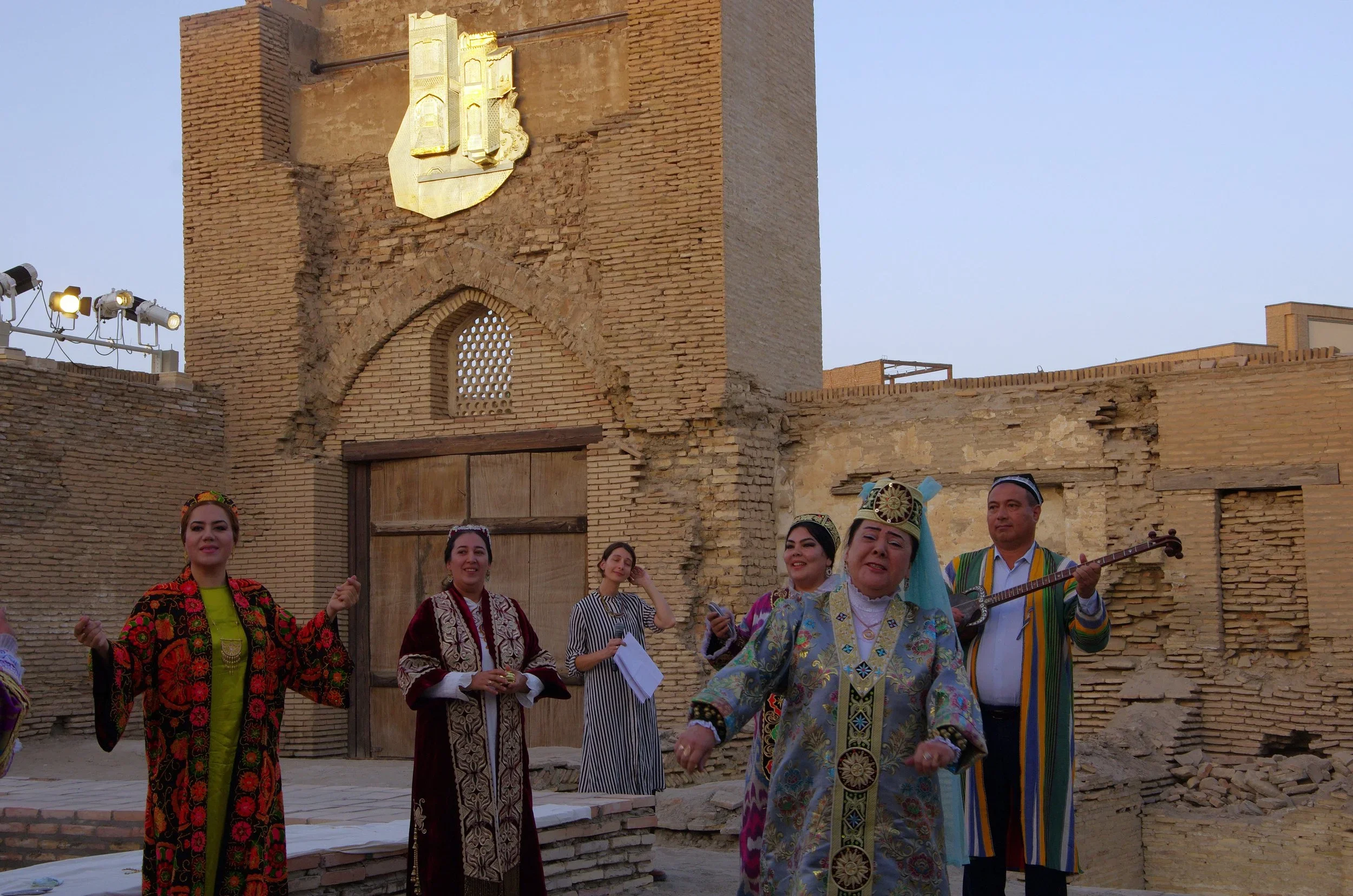
This live performance brings to the stage the poetry of Sozandas – female ritual leaders of Bukhara who interweave Tajik and Uzbek poetry, the musical tradition of shashmaqom, Zoroastrian symbols, and dance. Woven in the epic story-telling form of Bukhoro, Anna Lublina and the performers move between music, poetry, and histories of Bukhara’s diverse cultural forms to ask: what does Peace mean?
As the story lingers on the poetry of the Sozandas’ music and the celebrated Jewish Sozanda Tufahon Pinksahova, the artist reflects on how surviving ancient practices of polyphonic coexistence found in the multiple ethnicities and faith systems in Bukhara, might inspire a unique space for peace.
Co-curated by Katya Garcia-Anton and Diana Campbell.
Stuttgart, 2025-26
https://www.akademie-solitude.de/de/news/neue-stipendiatinnen-fuer-die-jahre-2024-2026-ausgewaehlt/
Symposium in Dresden | October 23, 2025 | Jugendkunstschule, Königstraße 15
In today’s Europe, Jewish histories, cultures, and identities are often spoken about, reframed, or politicized by others—especially in moments of global crisis. Who tells Jewish stories in Europe – and how can Jewish voices be heard on their own terms? This one-day symposium brings together artists, cultural workers, activists, and scholars from across Europe to explore questions of self-representation, memory, and cultural agency in a rapidly shifting political and cultural landscape.
Through conversations, panels, and working groups, we will examinelook at Jewish perspectives in art, heritage, and cultural policy today: How can Jewish narratives move beyond tokenism or narrow historical frames? What spaces, structures, and alliances are needed so Jewish cultural voices can flourish – visible, diverse, and self-determined? From Amsterdam to Warsaw, from Dresden to Belgrade, Jewish artists and cultural workers face similar challenges—this is where their voices meet.
The day will open with a keynote conversation on Jewish storytelling in Europe, followed by thematic panels on artistic self-representation, reclaiming memory, and building cultural empowerment. Afternoon working groups will focus on practical strategies for reshaping memory culture and reclaiming space for Jewish perspectives. We close by connecting local and transnational initiatives, asking what it will take to fortify our work and networks in the cultural and political fields in the years ahead.
https://juedische-woche-dresden.de/programm-symposium/?lang=en
Berlin, 2025
I will begin a new work with Gry Tingskog, Emil Maria Ertl, and Laura Stellaci.
https://ausland.berlin/event/dance-residency-3a
July 7-13, 2025 & October 3-7, 2025.
“My recent research has been focused on Jewish rhythms and how they have changed through colonial and national projects. In this residency, with the support of Emil Ertl and Laura Stellacci, I would like to move with these rhythms through the lens of a sacred trickster. The sacred trickster is the symbol of shape-shifting, of the counter-ego, of the a-moral, the trouble that helps you see the truth, the moment when laughter becomes crying and crying becomes laughter. I want to research this archetype using low-brow techniques of vaudeville (a tradition that Jews and Jewish women especially were instrumental in building throughout the United States). This includes tap dance, mime, and clown. What kind of stories can we tell through these campy and deeply coded forms? How can we use the sacred trickster to both (1) tell a complex history of heritage loss through diasporic Jewish rhythm and (2) love, enjoy, and re-embody my ancestral rhythms? How can my body hold these contradictions? How might the absurdity of movement forms like clown or tap dance deconstruct and reimagine the rhythms? And how might Vaudeville highlight the profundity of their loss? Regardless of the ultimate form, the goal is to tell a different Jewish history, one that celebrates the shared worlds of my Jewish ancestors.”

Germany/Belgium, 2025
Through funding from the Next Steps program at the Crespo Foundation, we will continue our research into mourning the more than human world.
“Veltroyer” is a performative mourning ritual that draws on traditional Jewish and Iranian practices to mourn the loss of more-than-human worlds. The project is the result of an ongoing collaboration between Raha Dehghani Vinicheh, Anna Lublina, and Jerry Lieblich. In 2023, they explored Jewish mourning rites as part of a residency at ID_Tanzhaus Frankfurt and developed a collective ritual themselves, which included obituaries for extinct bird species in poem form. Together with new collaborators, they will now continue their research into ecological grief incorporating Persian mourning rituals and traditions. The results will flow into the conception of a dance piece.

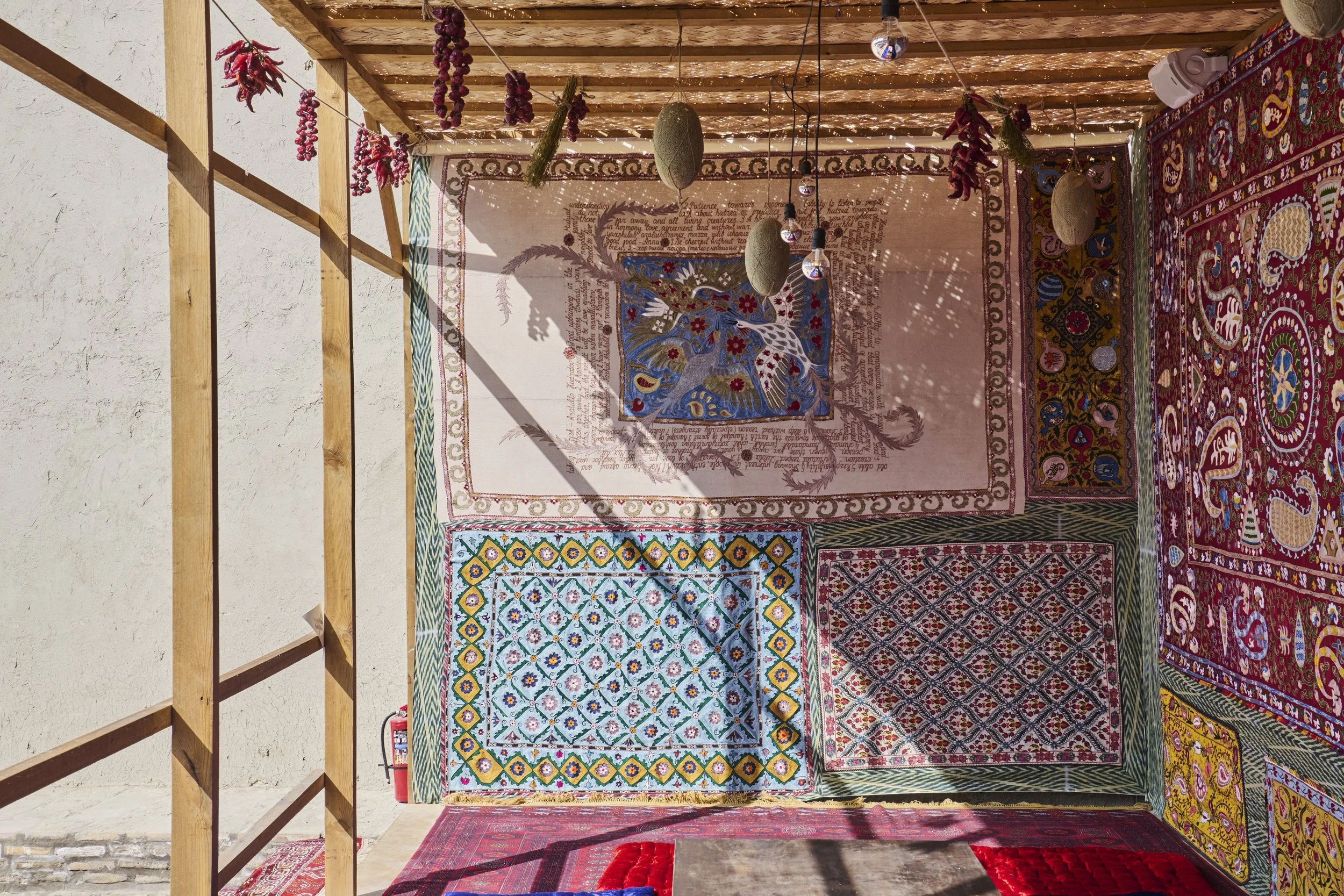
Bukhara Peace Agency asks the audience to consider what ingredients are needed to achieve peace. Based on a previous community-based project in Bukhara “Bukharan Peace Recipes” conducted by Lublina, the agency uses peace recipes from the community to construct a temporary structure. Designed with custom suzanis, kurpachas, willow branches, hanging fruit and herbs; the temporary structure asks us to think about shared histories between different ethnic and religious groups. The structure is accompanied by an audio story about Tufahon, a famous Jewish Sozanda (female ritual leader), and the legacy of Sozandas in Bukhara. Sozandas use song and dance to mix traditions from Islam, Zoroastrianism, and Judaism in their local rituals— embodying intercultural collaboration. The work asks: what is the recipe for making a life together without losing our differences?
September 5-November 20, 2025
Bukhara Biennial “Recipes for Broken Hearts”
Berlin, 2025
I will begin a new work with Gry Tingskog, Emil Maria Ertl, and Laura Stellaci.
https://ausland.berlin/event/dance-residency-3a
July 7-13, 2025 & October 3-7, 2025.
“My recent research has been focused on Jewish rhythms and how they have changed through colonial and national projects. In this residency, with the support of Emil Ertl and Laura Stellacci, I would like to move with these rhythms through the lens of a sacred trickster. The sacred trickster is the symbol of shape-shifting, of the counter-ego, of the a-moral, the trouble that helps you see the truth, the moment when laughter becomes crying and crying becomes laughter. I want to research this archetype using low-brow techniques of vaudeville (a tradition that Jews and Jewish women especially were instrumental in building throughout the United States). This includes tap dance, mime, and clown. What kind of stories can we tell through these campy and deeply coded forms? How can we use the sacred trickster to both (1) tell a complex history of heritage loss through diasporic Jewish rhythm and (2) love, enjoy, and re-embody my ancestral rhythms? How can my body hold these contradictions? How might the absurdity of movement forms like clown or tap dance deconstruct and reimagine the rhythms? And how might Vaudeville highlight the profundity of their loss? Regardless of the ultimate form, the goal is to tell a different Jewish history, one that celebrates the shared worlds of my Jewish ancestors.”
Stories of Muslim-Jewish alliances and a multi-perspective culture of remembrance are currently finding little space. Since the 7th October 2023 and the continuing suffering, the divisions in Germany have also increased further. The discussions in both public and in private are characterized by hardened fronts and enemy images, but also by powerlessness and despair. The question of what and who is publicly remembered is the subject of heated discussions and has a great influence on our present, our current political discourse and social cohesion. With the project Untold Stories of Togetherness, we want to start right there and give more visibility to Muslim-Jewish connections through a journey into the history of Jewish connections.
https://www.junge-islam-konferenz.de/unerzaehlte-geschichten-des-miteinanders/
Rhythm travels, Rhythm migrates, Rhythm adapts, Rhythm resists. Rhythm is a vibration that synchronizes your heartbeat to the heartbeat of another. In this performance, Rhythm is the character of Jewish diaspora, reaching back in time to shared Jewish-Muslim worlds: worlds that were not defined by borders, nationalisms, or divisions that emerged with the advent of colonialism. Artist Anna Lublina and musician hoyah work with tap dance, extended vocal techniques, and live mixing to ask what the political and cultural history of diasporic Jewish rhythm (and its embodiment) can teach us in a time marked by polarization and violence.

Creation / Performance: Anna Lublina and Samuel Hatchwell (hoyah)
Dramaturgy: Gry Tingskog
Text:Jasmina Al-Qaisi
Scenic / Costume Design: Julie Weitz, Laura Stellacci
Light Design: Gry Tingskog
Outside Eyes: Romuald Krężel
Tap Dance Support: Mariana Souza Prét
Vocal Support: Alex Piasente-Szymański
Production Management: Marit Buchmeier, Lisanne Grotz /xplusdrei Produktionsbüro
April 25-27, 2025, 19:00
TICKETS: https://www.ballhausost.de/the-land-speaks-to-me-of-something-shared/?lang=en&pos=1508
The Mit Wirkung event series centres on solidarity in the fight against German racism, with a focus on anti-Muslim racism and anti-Semitism. With the unique performative research by artists Anna Lublina and Samuel Hatchwell [hoyah], the sixth and final event in Mit Wirkung is dedicated to the often missing, often erased aspects of Jewish identity, roots and shared histories that can be traced back to the Jewish-Muslim world.
Rhythm travels, Rhythm migrates, Rhythm adapts, Rhythm resists. Rhythm is a vibration that synchronizes your heartbeat to the heartbeat of another. In this performance, Rhythm is the character of Jewish diaspora, reaching back in time to shared Jewish-Muslim worlds: worlds that were not defined by borders, nationalisms, or divisions that emerged with the advent of colonialism. Artist Anna Lublina and musician hoyah work with tap dance, extended vocal techniques, and live mixing to ask what the political and cultural history of diasporic Jewish rhythm (and its embodiment) can teach us in a time marked by polarization and violence.
Anna Lublina and their team are all artists trying to flee the confines of nationalism in the spirit of Doykeit.
The performance will be followed by an audience talk.
Rhythm travels, Rhythm migrates, Rhythm adapts, Rhythm resists. Rhythm is a vibration that synchronizes your heartbeat to the heartbeat of another. In this performance, Rhythm is the character of Jewish diaspora, reaching back in time to shared Jewish-Muslim worlds: worlds that were not defined by borders, nationalisms, or divisions that emerged with the advent of colonialism. Artist Anna Lublina and musician hoyah work with tap dance, extended vocal techniques, and live mixing to ask what the political and cultural history of diasporic Jewish rhythm (and its embodiment) can teach us in a time marked by polarization and violence.

Creation / Performance: Anna Lublina and Samuel Hatchwell (hoyah)
Dramaturgy: Gry Tingskog
Text:Jasmina Al-Qaisi
Scenic / Costume Design: Julie Weitz, Laura Stellacci
Light Design: Gry Tingskog
Outside Eyes: Romuald Krężel
Tap Dance Support: Mariana Souza Prét
Vocal Support: Alex Piasente-Szymański
Production Management: Marit Buchmeier, Lisanne Grotz /xplusdrei Produktionsbüro
March 28-29 & April 3&4, 20:00
TICKETS: https://studionaxos.de/de/produktionen/the-land-speaks-to-me-of-something-shared

The very first performance of new work-in-progress by Anna Lublina, followed by a post-performance discussion.
This research seeks to access ancestral knowledge through synchronization: a process of syncing one’s body rhythms with the rhythms of other people, objects or environments. Emerging from archival research on different forms of shared Jewish-Muslim rhythm—Uzbeki Shashmaqam music, prayer, agricultural practices, etc.— we explore tap dance, extended vocal techniques and live mixing to embody specific rhythms and synchronize with the worlds they emerge from.
How do these rhythms from historical moments of Muslim-Jewish conviviality generate different physicalities, states, tensions or intelligences in our bodies? What can these convivial rhythms teach us in a time marked by separation and violence?
Created and performed by Anna Lublina and Samuel Hatchwell (hoyah) | Dramaturgy by Gry Tingskog
Inspired by the card games played between Muslims and Jews on “Tahiti Beach” in Casablanca, Rüzgâr Buşki and Anna Lublina invite you to an evening of games, music, and conversation around the history of Muslim-Jewish ecumenical frames, the effect of ethno-nationalism on our shared cultural forms, and what a post-nation future could look like. In collaboration with fellow Yasmine Amal, poet and chef Jasmin Al-Qaisi, and musical artist Hoyah, the evening will include a short play-reading, tea, food from recipes that cross Muslim-Jewish borders, a DJ set of archival Judeo-Arabic music, and, of course, games. Join us!


As a preamble to a larger card game about Muslim-Jewish conviviality and post-nation-state futures, Rüzgâr Buşki and Anna Lublina present three watercolor paintings. Using the form of a traditional ketubah (illustrated Jewish marriage contract), patterns inspired by the tiles of Al-Aqsa Mosque, and a scripted dialogue; the works seek the textures of coexistence within ancestral worlds and examine how these forms have been dissected or altered to fit Western cultural grammars-- or disappeared completely in the name of ethno-nationalism.


MODULE 1: LISTENING
24. - 27.10.2024 / GEBHARDSHÜTTE, ODENWALD

I will give a short artist talk on my work and on my newest project around rhythm as a tool to access the textures of ancestral worlds.

Undying in Yidderland returns to Hessen for the MADE.Festival
Freitag 05.07. / 18 Uhr Beginn und Ende im Foyer des Kleinen Hauses
Samstag 06.07. / 16 Uhr Beginn und Ende im Foyer des Kleinen Hauses

Riksteatern (Stockholm, Sweden)
https://www.riksteatern.se/dans/produktionsresidens-dans/produktionsresidens-dans-2024/parasight/

https://www.cecartslink.org/participant/anna-lublina/


Thursday, February 1 | 7:30PM
Friday, February 2 | 7:30PM
Saturday, February 3 | 7:30PM
2022-23 Renewal Residency Artist Andros Zins-Browne is an NYC-born performance and dance artist whose work has been presented and commissioned globally.
Zins-Browne’s recent work (duel c, River-To-River Festival, 2023) explores ideas of care and violence commingled between bodies. With duel H, he extends his inquiry into relationships between bodies and ecology, exploring fluidity between human animals and land in their potentialities.
Inhabiting a space where binaries as care and violence, human and non-human, above and below might intertwine, the performance rearranges the hierarchical terms we habitually stand on.
Underground
Under the ground
Beneath the earth
Below the surface
Be low
To exist
An ex-pression of
Ex-
A life out of / from
negation
When life on earth seemed uninhabitable,
We went under
sub
-stance
-liminal
-sists
Subterranean growth
Subterranean light
Subterranean joy

The Blind Beggar, archival inkjet print, 2023
Photo by Jackie Langelier
Costume by Jill Spector
Doikayt (Hereness) is a multimedia performance art project that stages live, character-driven performances at Jewish sites across Eastern Europe to explore themes of loss and healing through a diasporic lens. The project will reanimate Yiddish folktales and revitalize Ashkenazi performance traditions in the lands where Yiddish culture once flourished but was nearly extinguished by genocide.
The first performances will take place June 27-July 2, 2023. The artwork will be staged as a week-long event on the streets of Kazimierz (the Jewish district) and introduce audiences to a contemporary reimagining of The Seven Beggars, a famous hasidic tale by Rebbe Nachman of Breslov.
For each day of the performance, Julie Weitz will embody a different beggar and be accompanied by a queer cast of Jewish diaspora artists, including Moriel Rothman-Zecher + Ira Khonen Temple + Anna Lublina. Our vibrant reimagining of Nachman's cryptic tale will invite audience participation and combine poetry, music, movement, and art to reveal how each beggar’s impairment is actually a blessing in disguise.
June 27- July 2
Galicia Jewish Museum
Krakow, Poland

PC: Julieta Cervantes
duel c is a performance where care and violence commingle, stirring toward undoing. A dance of entanglement, duel c inhabits an illogic of sentience and perpetual movement, where agreement and disagreement, with and against, solidarity and solitary, harmony and dissonance are free to assume each other's properties.
duel c is a movement piece in response to Charles Gaines’ Moving Chains, a public art sculpture presented by Governors Island Arts, Creative Time, and Time Square Arts on Governors Island.
Created and Performed with Ley
Accomplices Aeirrinn, oni lem, Kriss Lee
Voices Maribel Alonso, Rebekah Fawn Heller, Fay Victor
Dramaturgy by Anna Lublina
Thanks to Elaine Carberry
duel c is made possible through Danspace Project's Renewal Residency and FourOneOne. Additional support has been provided by the Cheswatyr Foundation.
Presented in partnership with Governors Island Arts and Creative Time.
Supported by Dance Reflections by Van Cleef & Arpels.

Here is to the experience of time framed by waiting and the power relations that are weaved into it. The significant political questions and demands for understanding what waiting have been about. Waiting for an acceptance letter, waiting for a visa appointment, waiting for another year, waiting for my case to come up, waiting for my number to be called, waiting for the morning to rise. I, like many, am still waiting for our voices to be heard and for a sense of calm and belonging to settle in our bodies. In “over and over and over”, three performers long for a channel to tune in, to open up the singular weight of their waiting into a collective experience.
Conception: Raha Dehghani Vinicheh
Performance: Joana Ferraz, Raha Dehghani Vinicheh, Nastya Dzyuban
Dramaturgy: Anna Lublina
Costumes Designer: Laura Stellacci
Sound composer: Shaahin Peymani
March 24-25, 8pm
Mousonturm Kunstlerhaus
Veltroyer is a performance ritual of grief, calling on traditional Yiddish land practices to mourn the loss of more-than-human worlds. The project emerges from an ongoing collaboration between Jerry Lieblich and Anna Lublina. Together, we’ve been exploring ritual and ceremony as performative practice and investigating traditional Yiddish cultural forms as ancestral groundwork for contemporary spirituality and aesthetics.
Our time at ID Frankfurt will mark the beginning of this project. It will give us time for research and to develop initial practices. We will begin by exploring Jewish rituals of grief. How do Jews grieve loss? What regional and temporal variations are there in these practices? What structures can hold the process of loss? What is the relationship to time? Space? The body? Isolation or collectivity? We are interested in seeing how these embodied traditions have shifted over time, and how they may disappear altogether.
We will also research Jewish land practices and conceptions of the natural world. How does Judaism consider the lives of animals, plants, rivers? Where has Jewish culture drawn the line between “nature” and “culture”? How does it conceive the connections or borderlands between those two realms? What regional, folk, or non-doctrinaire practices exist within the tradition?
Once we have a foundation of research, we will begin to develop our own practices of grief and nature-connection. For instance, we can imagine writing obituaries for the severe loss of birds globally. An obituary for a specific species might be sung or danced in the rhythm of its birdcall. Practices of shrine-building, place-naming, listening, attending, laughing – in what ways can we practice our grief?